
SEO Management and Analytics: A Practical Guide to Measuring and Improving Search Performance
SEO Management and Analytics: A Practical Guide
Search engine optimisation (SEO) is more than choosing keywords or publishing blog posts. It is an ongoing process of planning, making improvements and measuring what happens next. SEO management provides the structure for that work, while analytics helps you understand whether it is producing useful results.
When the two work together, businesses can make informed decisions about their websites, improve the experience for visitors and build a more effective presence in organic search.
What is SEO management?
SEO management is the process of organising and overseeing the activities that help a website appear in relevant search results. It can include technical checks, keyword research, content planning, on-page optimisation, link development and performance reporting.
Good management turns these activities into a coherent programme rather than a collection of one-off tasks. It helps a team decide what to prioritise, who is responsible for each action and how progress will be reviewed.
What does SEO analytics involve?
SEO analytics is the collection and interpretation of data related to search visibility and website performance. It helps answer practical questions, such as:
- Which pages are attracting organic visitors?
- What search queries are bringing people to the site?
- Are important pages being indexed by search engines?
- Do visitors take useful actions after arriving from search?
- Which parts of the SEO programme need attention?
Analytics is not simply about collecting figures. Its value comes from interpreting them in context and using the findings to guide future work.
Set clear SEO objectives
Before choosing metrics, decide what SEO should contribute to the wider business. A service company might want more qualified enquiries, while an online retailer may focus on product discovery and sales. A publisher may be aiming to grow readership or subscriptions.
Specific objectives make it easier to distinguish useful progress from activity that looks impressive but has little practical value. For example, an increase in organic visits may be encouraging, but the quality of those visits matters too. Are people reaching relevant pages and taking the next step?
Choose meaningful metrics
The right measures depend on your objectives, website and audience. Common SEO metrics include:
- Organic clicks and sessions: Visits that come from unpaid search results, as reported by relevant analytics platforms.
- Search impressions: How often a page appears in search results.
- Click-through rate: The proportion of impressions that result in a click.
- Search rankings: The positions of selected pages for relevant queries. Rankings can vary by location, device and personalisation, so they should not be treated as a complete measure of success.
- Conversions: Valuable actions, such as purchases, enquiries, bookings or sign-ups.
- Engagement: Indicators that help show how visitors interact with the site, interpreted alongside the purpose of each page.
- Technical health: Issues relating to crawling, indexing, page experience, redirects and site structure.
A balanced view is more useful than relying on a single number. For instance, impressions may rise while clicks remain unchanged. That could suggest that pages are appearing more often but need clearer titles or descriptions, or that the queries are not closely aligned with the content.
Build a consistent SEO management process
Establish a baseline
Record current performance before making significant changes. Review important landing pages, search queries, conversions, technical issues and the visibility of priority topics. A baseline makes it easier to assess progress over time.
Audit the website
An SEO audit can identify issues that make a site harder to discover, understand or use. Areas to review may include crawlability, indexation, internal links, duplicate pages, page speed, mobile usability and structured data. Not every issue needs immediate attention; prioritise problems according to their likely impact and the effort required to fix them.
Research topics and search intent
Keyword research helps reveal the language people use when looking for products, services or information. Consider the intent behind a query as well as its search volume. A page that directly answers a specific need is often more useful than one built around a broad term without a clear purpose.
Plan and improve content
Create content that is accurate, helpful and suited to the needs of its intended audience. Existing pages may need updating, combining or improving rather than replacing. Use descriptive headings, clear page titles and internal links to help both visitors and search engines understand how information is organised.
Assign work and track changes
SEO often involves several people, including content writers, developers, designers and marketing teams. Keep a record of proposed actions, owners, deadlines and completed changes. This makes it easier to understand what was changed if performance shifts later.
Review results and refine the plan
Check performance regularly, but avoid making major decisions based on short-term fluctuations alone. Search activity can change with seasonality, competition, website updates and search engine changes. Compare appropriate time periods and investigate the reasons behind significant movements.
Use analytics to guide action
Data becomes useful when it leads to a clear decision. If a valuable page has many impressions but a low click-through rate, review whether its title and description accurately communicate the page’s value. If visitors arrive but rarely complete a key action, examine the page’s relevance, clarity and user experience.
If an important page receives little organic traffic, check whether it is indexed, internally linked and aligned with the queries it is meant to serve. The solution may involve technical work, stronger content or clearer connections from other pages on the site.
These are starting points, not automatic diagnoses. Always consider the page’s purpose, the quality of the data and other changes that may have affected performance.
Reporting SEO performance
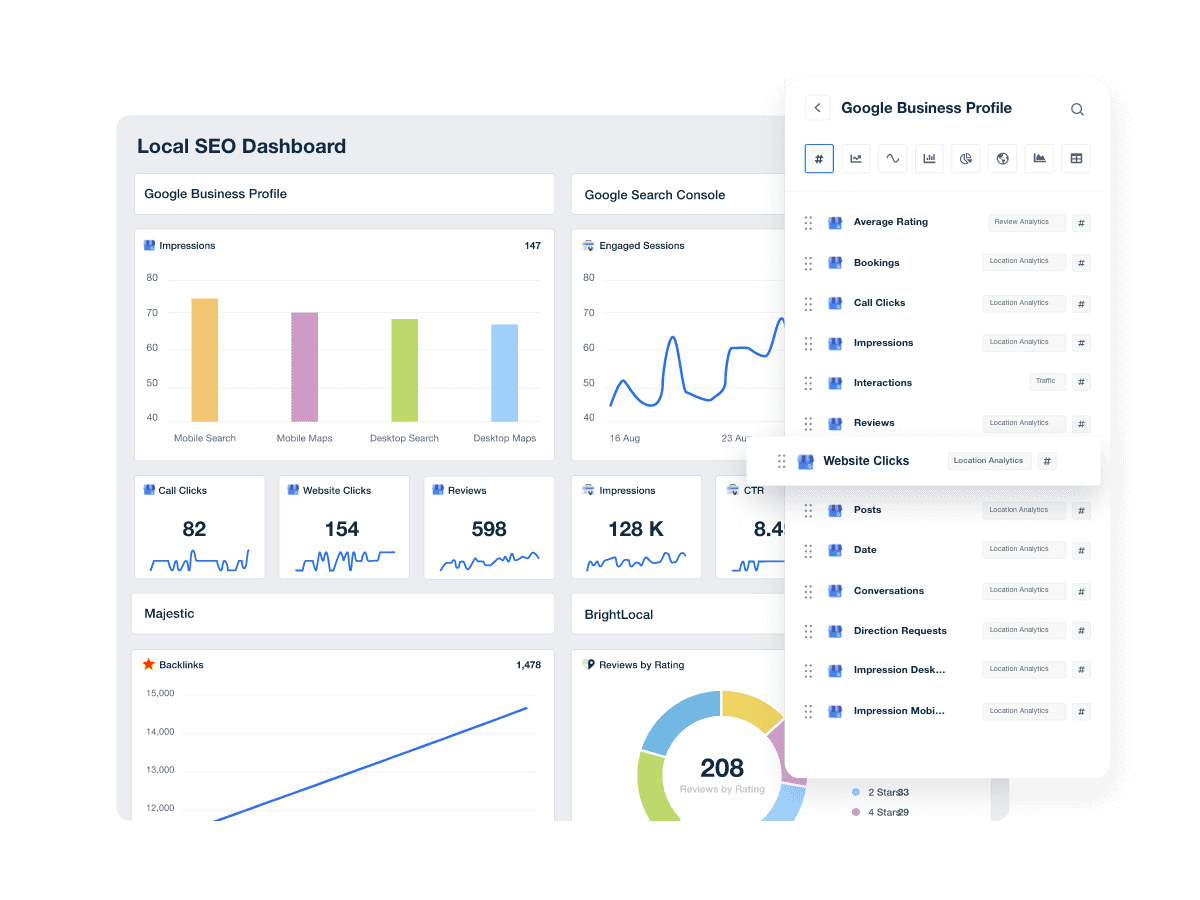
A useful SEO report should be clear enough for stakeholders to understand without requiring them to interpret a large collection of charts. It should explain:
- What changed during the reporting period
- Which objectives and metrics matter most
- What may have contributed to the results
- What work has been completed
- What the next priorities are
Include context when presenting results. For example, distinguish between brand-related searches and non-brand searches where possible, and note significant website changes or seasonal effects. This helps prevent normal fluctuations from being mistaken for lasting progress.
Common mistakes to avoid
- Chasing rankings alone: High positions are not valuable if they do not attract the right audience or support business goals.
- Reporting too many metrics: A long dashboard can obscure the few measures that matter.
- Ignoring technical foundations: Strong content can struggle if search engines cannot access or interpret the relevant pages.
- Making changes without recording them: Without a change log, it can be difficult to connect actions with results.
- Reacting too quickly: Short-term movements do not always indicate a lasting trend.
- Treating analytics as a verdict: Data points to questions and opportunities; it does not always explain the cause on its own.
Conclusion
Effective SEO management combines clear objectives, organised delivery and regular measurement. Analytics shows where a website is gaining visibility, how visitors behave and which areas may need improvement. By using those insights to prioritise practical work, businesses can make their SEO activity more focused and accountable.
The most useful approach is continuous: understand the audience, improve the site, measure the results and adapt the plan as new evidence emerges.
Top 5 Tips for Effective SEO Management and Analytics
- Set clear SEO goals and review progress monthly.
- Track organic traffic, rankings and conversions.
- Use analytics to find pages with declining traffic.
- Prioritise fixes by impact and effort.
- Check tracking and reporting for accuracy.
Set clear SEO goals and review progress monthly.
Set clear SEO goals that support your wider business priorities, such as increasing relevant organic traffic, generating more enquiries or improving sales from search. Choose a few measurable indicators to track, establish a baseline and review progress monthly. Regular reviews help you spot trends, understand what is working and adjust your priorities, while avoiding overreaction to short-term fluctuations.
Track organic traffic, rankings and conversions.
Track organic traffic, keyword rankings and conversions to understand how well your SEO activity is performing. Organic traffic shows how many visitors arrive from unpaid search results, while rankings indicate how visible your pages are for relevant searches. Conversions reveal whether those visits lead to valuable actions, such as purchases, enquiries or sign-ups. Reviewing these metrics together gives a more complete picture than focusing on rankings alone and helps you decide where to make improvements.
Use analytics to find pages with declining traffic.
Use your analytics tools to identify pages whose organic traffic has declined over time. Compare equivalent periods, such as this month with the same month last year, to account for seasonal changes, and check search impressions, clicks, rankings and conversions to understand what has changed. A drop may be linked to outdated content, stronger competition, technical issues or changing search behaviour. Once you have investigated the likely cause, prioritise updates that will make the page more useful and relevant to your audience.
Prioritise fixes by impact and effort.
Prioritise SEO fixes by weighing their likely impact against the effort needed to complete them. Start with issues that could significantly improve visibility, usability or conversions and are relatively straightforward to resolve, such as correcting broken internal links or updating an important page. More complex changes may still be worthwhile, but should be planned according to their potential value, available resources and dependencies. This approach helps teams focus on practical improvements rather than spending time on low-impact tasks.
Check tracking and reporting for accuracy.
Check your tracking and reporting regularly to make sure the data is accurate and complete. Confirm that analytics tools are installed correctly, key actions such as enquiries or purchases are being recorded, and filters are not excluding important visits. Compare reports with other reliable sources where possible, and note any tracking changes that could affect the figures. Accurate data helps you assess SEO performance with confidence and make better-informed decisions.