
Optimising Search Results for Your Website: A Practical Guide
Optimising Search Results for Your Website
When people search online for a product, service or answer, they usually choose from the results that seem most relevant and trustworthy. Improving your website’s visibility in search results can help the right people find your pages, but it takes more than adding keywords. Effective search engine optimisation (SEO) combines useful content, a well-structured website and a good experience for visitors.
Start with your audience’s search intent
Before creating or updating a page, consider what someone is hoping to find when they make a particular search. They may be looking for information, comparing options, seeking a local provider or ready to make a purchase. This is known as search intent.
Choose topics and search terms that reflect the needs of your audience. Keyword research can help you discover the words people use, related questions and how competitive a topic may be. Use these insights to plan relevant pages, rather than trying to force a popular phrase into content where it does not belong.
Create genuinely useful content
Pages are more likely to attract and retain visitors when they answer questions clearly and provide information that is accurate, relevant and easy to use. Explain the subject in enough detail for your audience, and include practical examples where they add value.
- Give each page a clear purpose and focus.
- Use straightforward language suited to your readers.
- Organise information with descriptive headings.
- Keep facts current, especially when details may change.
- Review existing pages and improve, combine or remove content that is outdated or no longer useful.
Avoid producing pages solely to target small variations of the same search term. Repetitive or thin content can make a site less helpful to both visitors and search engines.
Use keywords naturally
Once you understand the topic and intent behind a search, include relevant terms in places where they help readers understand the page. These may include the page title, main heading, introductory paragraph and subheadings. Related terms can also appear naturally throughout the text.
There is no need to repeat a keyword as often as possible. Keyword stuffing makes content awkward to read and does not provide a sound basis for long-term visibility. Write for people first, then check that the page clearly communicates what it is about.
Write clear titles and descriptions
The title link and description shown in search results can influence whether someone chooses to visit your page. Give every important page a distinctive, concise title that accurately describes its content. A good title helps users understand what they will find before they click.
Write a useful meta description that summarises the page and, where appropriate, explains its benefit to the reader. Search engines may choose to display different text, so there is no guarantee that your description will appear exactly as written. Avoid misleading claims or promises.
Make your website easy to navigate
A logical structure helps visitors find information and helps search engines understand how pages relate to one another. Group related topics, use clear navigation labels and link between relevant pages. For example, a detailed guide could link to a related service page, while the service page could point to useful supporting information.
Use descriptive link text so people know where a link will take them. Avoid relying on vague phrases such as “click here” when a more specific description would be clearer.
Pay attention to technical SEO
Technical issues can make it harder for search engines to access, understand or display your pages. Regular checks can help identify problems before they affect users. Consider the following:
- Make sure important pages can be crawled and indexed.
- Use a secure HTTPS connection.
- Check that your website works well on mobile devices.
- Improve page loading speed and avoid intrusive elements.
- Fix broken links and redirect obsolete URLs appropriately.
- Use canonical tags where similar or duplicate URLs need clarification.
- Provide a current XML sitemap and a correctly configured robots.txt file.
Technical changes should be tested carefully. If you are unsure about a setting, seek advice before changing it, as a small configuration error can prevent pages from appearing in search results.
Improve the experience for visitors
Search visibility is only part of the picture. A useful page should also be comfortable to read and easy to use. Make sure text is legible, buttons are accessible, forms work properly and key information is not difficult to find. On mobile, check that users do not need to zoom or scroll sideways to read the content.
Accessibility improvements, such as meaningful alternative text for informative images and clear labels for form fields, can make your website easier for more people to use. They also encourage clearer, better-organised pages.
Help search engines understand your pages
Structured data is a standardised way to describe certain information on a page, such as a product, event or organisation. When implemented correctly and in line with search engine guidelines, it may make a page eligible for enhanced search result features. It does not guarantee that those features will appear, and the structured data must accurately reflect visible page content.
Use structured data only when it is relevant, and validate it with appropriate testing tools after implementation.
Build trust and authority over time
Trust is earned through consistent quality. Keep your business details accurate, provide clear contact information and explain who is responsible for important content. If you publish advice, make sure it is carefully researched and reviewed by people with suitable knowledge.
Links from other reputable websites can help people discover your content and may support your site’s visibility. Focus on producing something worth referencing, such as original research, a useful resource or expert guidance. Avoid buying links or using schemes designed to manipulate rankings.
Measure results and keep improving
SEO is an ongoing process, and changes may take time to show results. Use analytics and search performance tools to monitor impressions, clicks, search queries, page traffic and conversions. Look for patterns rather than reacting to every short-term fluctuation.
If a page receives impressions but few clicks, review whether its title and description accurately communicate its value. If visitors arrive but do not take the next step, consider whether the page meets their expectations and makes the next action clear. Compare performance over a suitable period, and document significant changes so you can understand what has helped.
A practical approach to better search results
Optimising search results for your website is not about finding a quick trick. It is about helping search engines understand your pages while giving visitors useful, trustworthy information and a smooth experience. Start with your audience, improve the most important pages, resolve technical issues and measure what happens. Consistent, thoughtful work can strengthen your website’s visibility and make it more valuable to the people who find it.
7 Benefits of Optimising Your Website for Search Engines
- Increases your website’s visibility in search results.
- Attracts more relevant visitors.
- Improves the experience for website users.
- Builds trust and credibility.
- Helps customers find your products or services.
- Can generate more leads and sales.
- Supports lasting growth in organic traffic.
Four Drawbacks of Search Engine Optimisation for Your Website
- SEO can take months to show results.
- Search rankings can change without warning.
- Ongoing optimisation requires time and effort.
- Competitive keywords may be difficult to rank for.
Increases your website’s visibility in search results.
Optimising your website for search engines can increase its visibility in search results, making it easier for potential customers and readers to find your pages. By creating relevant, useful content and using clear page titles and headings, you can improve your chances of appearing when people search for topics related to your website. Greater visibility can bring more visitors and help more people discover what you offer.
Attracts more relevant visitors.
Optimising your website’s search results can attract more relevant visitors by helping your pages appear for searches that match your products, services or expertise. When your content reflects what people are genuinely looking for, visitors are more likely to find useful information, stay on your site and take a meaningful next step, such as making an enquiry or completing a purchase.
Improves the experience for website users.
Optimising your website for search results can also make it easier and more enjoyable for visitors to use. Clear page titles, helpful content and logical navigation help people find the information they need, while fast loading times and a mobile-friendly design make browsing smoother across devices. By focusing on these improvements, you can give users a more satisfying experience and help them feel confident about taking the next step.
Builds trust and credibility.
Optimising your website for search results can build trust and credibility by making it easier for people to find clear, relevant and helpful information. Well-organised pages, accurate content and a secure, easy-to-use website create a positive first impression and show visitors that your business takes their needs seriously. Strong visibility can also make your brand easier to recognise, helping potential customers feel more confident when choosing your products or services.
Helps customers find your products or services.
Optimising your website for search results helps potential customers find your products or services when they search for solutions you offer. By using relevant keywords, creating helpful content and making key information easy to access, you can improve your visibility to people who are already interested in what your business provides. This can bring more qualified visitors to your website and make it easier for them to discover how you can meet their needs.
Can generate more leads and sales.
Optimising your website’s search results can help attract people who are already looking for the products or services you offer. By making relevant pages easier to find and ensuring they clearly explain your value, you can bring more qualified visitors to your site. A straightforward journey from search result to useful information—and then to a clear next step, such as making an enquiry or placing an order—can turn more of that traffic into leads and sales.
Supports lasting growth in organic traffic.
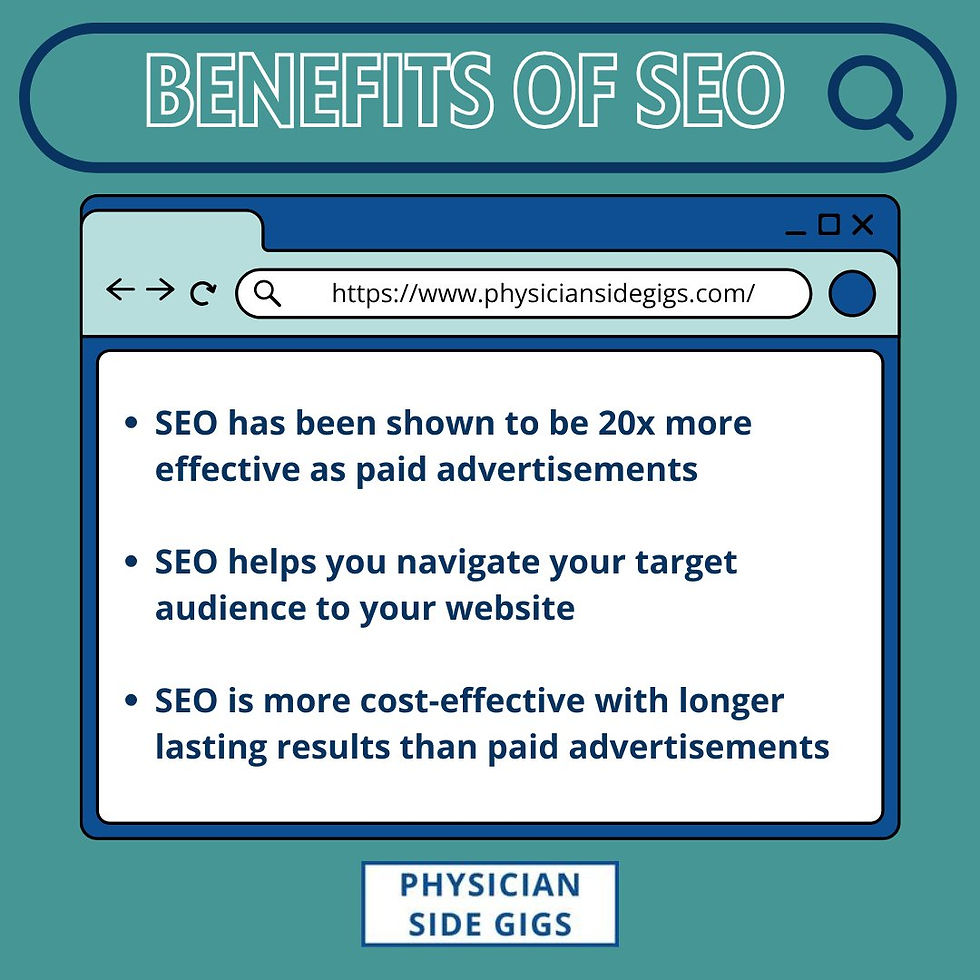
Optimising your website for search can support lasting growth in organic traffic by helping useful, relevant pages appear for the searches your audience makes. Unlike paid advertising, which typically stops bringing visitors when the budget runs out, well-maintained content can continue attracting people over time. Regularly updating pages, improving the user experience and addressing technical issues can help preserve that visibility and build a steadier flow of visitors.
SEO can take months to show results.
One drawback of SEO is that it can take months to show noticeable results. Search engines need time to discover and assess changes, while competition, your website’s history and the scale of the improvements can all affect progress. This means SEO may not be suitable as a quick fix for businesses needing immediate traffic, and it requires patience, consistent effort and regular monitoring.
Search rankings can change without warning.
One drawback of optimising search results is that rankings can change without warning. Search engines regularly update their algorithms, and competitors may improve their own websites, so a page that performs well today could lose visibility tomorrow. These fluctuations can affect website traffic and enquiries, even when no changes have been made to your site. Regularly reviewing performance and focusing on useful, reliable content can help you adapt, but rankings cannot be guaranteed.
Ongoing optimisation requires time and effort.
Ongoing optimisation requires time and effort because search trends, competitors and search engine guidelines can change. Website owners need to review performance regularly, update content, fix technical issues and test improvements. These tasks can be demanding, particularly for small businesses with limited resources, and results may take time to appear.
Competitive keywords may be difficult to rank for.
Highly competitive keywords can be difficult to rank for, particularly if your website is new or competing against established brands with strong content and many quality backlinks. Even well-optimised pages may take considerable time and effort to gain visibility, with no guarantee of reaching the top results. Focusing only on these broad search terms can also use up resources that might be better spent targeting more specific phrases that closely match your audience’s needs.